
Table of Contents
- What to look for in a puppy training treat
- Healthy dog treats: commercial and natural options
- High-value treats for sessions with distractions
- Positive reinforcement training with snacks: how to use them step-by-step
- How many treats to give during a training session
- Homemade and budget-friendly alternatives to train without overspending
- Common mistakes when using treats with puppies
- Conclusion
- Frequently Asked Questions
Last update: September 6, 2026
Choosing the best treats for puppy training is not just about buying the most colorful bag on the shelf. A good treat should motivate your dog, be safe for their growth stage, and fit your budget. In this Mi Tienda 4 guide, we analyze what makes a snack truly effective for positive reinforcement and how to use it without ruining their diet. Reward-based training can accelerate learning by up to 50% compared to punishment-based methods, according to educational guides from Best Life 4 Pets. Below, we show you exactly what to look for, what to avoid, and how many treats are enough for your puppy to learn quickly and happily.
What to look for in a puppy training treat
The ideal treat combines three qualities: small size, soft texture, and high nutritional value. Puppies have small mouths and short attention spans; a bite that requires too much chewing disrupts the flow of training. Look for treats of approximately 1 centimeter that can be consumed in seconds.
Palatability is the deciding factor. If your puppy does not show enthusiasm for the treat, it will not function as canine motivation. Many owners discover that food is not always the most effective motivator: some dogs respond better to specific toys than edible treats during sessions, as discussed in dog owner communities on Reddit. That is why you should test several options and observe which one generates the most immediate response.
Healthy dog treats: commercial and natural options
The decision between a commercial treat and a natural one is not binary: it depends on your puppy's development stage, their digestive history, and the training context.
Commercial options: what works and what is marketing
The puppy treat market in the United States exceeds $2 billion annually, and the variety can be overwhelming. The three most useful formats for training are:
- Freeze-dried: These preserve raw protein without cooking, maintain an intense aroma that catches the dog's attention, and break easily into small pieces. They are the preferred option for many trainers for high-value sessions.
- Semi-moist: These have the soft texture ideal for puppies under 6 months or during teething. They tend to contain more moisture and less processing than baked ones.
- Dehydrated: More economical than freeze-dried, but the texture can be harder. Verify that they do not contain artificial glycerin or preservatives like BHA or BHT.
Functional snacks (for teeth, joints, or skin) have their place, but not during basic training: they are usually larger and higher in calories, and their benefit is cumulative, not immediate. Use them as a supplement outside of sessions.
The angle no one covers: allergies and digestive sensitivities
Most guides assume that all puppies tolerate any protein. The clinical reality is different: canine food allergies typically appear between 4 and 6 months of age, just when intensive training begins. The most common symptoms are itching in the ears and paws, abdominal redness, and recurring soft stools.
The most problematic proteins in commercial treats are, in order of frequency: chicken, beef, dairy, and egg. Wheat, soy, and corn appear as fillers in budget brands and can trigger digestive sensitivities without being true allergies.
Practical strategy for sensitive puppies
- Introduce only one new treat at a time, wait 48 hours before adding another.
- Prioritize novel proteins like turkey, duck, salmon, or lamb if you suspect sensitivity to chicken.
- Read the full label, not just the declared flavor. Many "salmon" treats contain chicken meal as the second ingredient.
- Try the simplest monoprotein option available: a single ingredient, without preservatives or flavorings.
Safe natural alternatives based on the stage
For puppies without known sensitivities, the safest and most effective homemade options are:
- Boiled chicken breast without salt: The most versatile option. Cook, shred, and freeze in small portions.
- Cooked sweet potato in 1 cm cubes: Naturally sweet, soft, and rich in fiber. Ideal for teething.
- Cooked pumpkin: Low in calories and easy to digest. Useful for puppies with irregular digestion.
- Shredded salmon (without bones or skin): Rich in omega-3, beneficial for skin and coat.
Avoid grapes, raisins, onions, garlic, xylitol, and chocolate, which are known toxins for dogs at any age. Peanut butter must be 100% natural, without xylitol, a lethal sweetener for canines.
| Treat Type | Main Advantage | Potential Risk | Best Use |
|---|---|---|---|
| Freeze-dried | Intense aroma, high motivation | High cost | Sessions with distractions |
| Semi-moist | Soft texture, easy to break | May contain more additives | Daily home training |
| Homemade boiled chicken | Economical, total ingredient control | Requires preparation and refrigeration | Long or repeated sessions |
| Cooked sweet potato | Soft, sweet, natural fiber | Less protein | Teething and calming exercises |
The golden rule: if your puppy has a sensitive digestive system, simplicity wins. A single-ingredient treat that your dog tolerates well is worth more than ten sophisticated options that cause them discomfort.
High-value treats for sessions with distractions
High-value treats are those that your puppy only receives in special circumstances: parks, busy streets, or vet visits. In these environments, the competition for their attention is fierce, and a common treat will not be enough. The most effective options include sausages cut into small pieces, dehydrated liver, or soft cheese in minimal quantities.
The key lies in novelty and flavor intensity. A strong aroma captures the dog's attention before they look at the distracting stimulus. Keep these treats in a separate bag and use them exclusively for difficult contexts, thus maintaining their high incentive value.
Positive reinforcement training with snacks: how to use them step-by-step
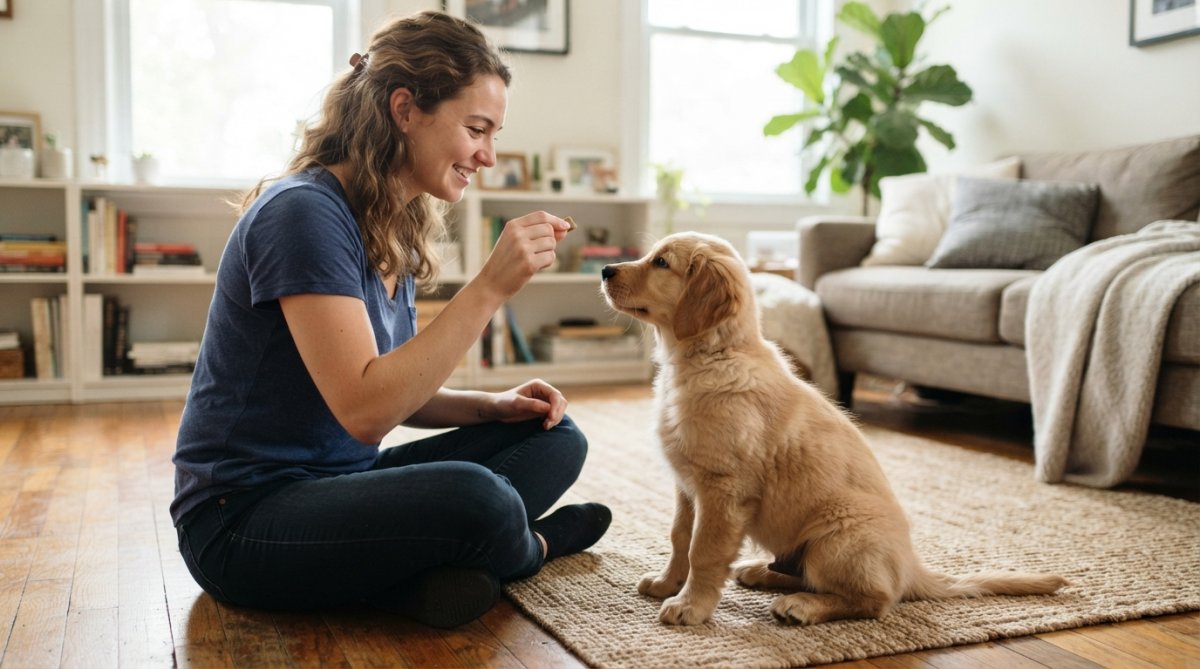
Positive training with snacks works when the treat becomes a communication tool, not a bribe. The correct sequence is: mark the desired behavior, deliver the treat immediately, and briefly celebrate before continuing.
- Have treats ready and accessible before starting the session
- Use a clear signal, such as a clicker or a short word, at the exact moment the puppy does the right thing
- Deliver the treat within two seconds after the signal
- Repeat the exercise 3 to 5 times, then take a short break
- End the session with an easy exercise that the puppy has already mastered, ensuring a positive finish
Clicker training works especially well alongside treats because the sound marks the exact behavior, while the snack reinforces the association. Your puppy learns that the click means "what you did was right," and then receives the reward.
How many treats to give during a training session
The frequency of delivery depends on the duration of the session and the size of the puppy. In general, a 5 to 10-minute session should not include more than 10 to 15 small treats. If using commercial treats, check the feeding guide on the packaging to adjust daily portions.
A practical rule: treats should not represent more than 10% of the puppy's daily calories (reddit.com). If you are training a lot, compensate by slightly reducing the amount of regular food in their main meals. Weight control early on prevents joint and metabolic problems in adulthood.
Homemade and budget-friendly alternatives to train without overspending
Intensive training can consume between 50 and 150 treats per week. At $0.50-$1.00 per ounce for premium commercial treats, that represents between $15 and $40 monthly just in snacks. The good news: with one hour of weekly preparation, you can reduce that cost to less than $5.
The math of saving
| Source of treats | Cost per 100 pieces (approx. 1 cm) | Preparation time | Nutritional value |
|---|---|---|---|
| Premium commercial treats | $8-$15 | Zero | Variable, depends on the brand |
| Boiled chicken breast | $2-$4 | 20 minutes | High, lean protein |
| Cooked beef liver | $1.50-$3 | 15 minutes | Very high, iron-rich |
| Dog's regular kibble | $0.50-$1 | Zero | Complete and balanced |
| Roasted sweet potato | $1-$2 | 30 minutes | High in fiber and vitamins |
The kibble trick: your first line of savings
Before cooking anything, try using the puppy's regular food. If your dog is hungry and the session happens before their main meal, their own kibble can work as a reward. This eliminates extra costs and prevents caloric overload. Schedule sessions 30-60 minutes before mealtime, when food motivation is at its peak.
Batch prepping: the solution for intensive training
Weekly meal prep transforms cost and convenience:
- Buy in bulk: A whole chicken breast (approximately 500g) yields between 400 and 600 1cm pieces.
- Batch cook: Boil 2-3 breasts or 500g of liver once a week. Chicken takes 15-20 minutes; liver, 10-12.
- Shred and portion: Divide into freezer bags with the amount estimated for 3-4 sessions.
- Freeze and thaw as needed: Take out a portion the night before or submerge the sealed bag in warm water 5 minutes before training.
Zero-cost alternatives you already have at home
<- Baby carrot: Crunchy, sweet, and low in calories. Slice thinly for puppies under 4 months old.
- Seedless apple: Cut into small cubes. Always remove the seeds, which contain trace amounts of cyanide.
- Cucumber: 95% water, almost zero calories. Useful for long sessions where you need many rewards without fattening the puppy.
- Moistened kibble: Take 10-15 pieces of kibble, moisten them with warm water for 5 minutes, and they will become soft and more aromatic. A trick many trainers use to increase palatability at no extra cost.
How to combine savings with enrichment
Enrichment tools reduce dependence on processed treats by turning regular food into an activity. A snuffle mat with hiding spots turns 20 grams of kibble into 15 minutes of mental stimulation. A lick mat with pumpkin puree or unsweetened natural yogurt offers a calming activity that releases endorphins, without the need for extra treats.

The initial $10-$15 investment in a snuffle mat or a lick mat is recouped in less than a month if you reduce commercial treat consumption from 100 to 30 pieces per week. And the benefit isn't just financial: puppies that work for their food in foraging activities develop better problem-solving skills and frustration tolerance.
Common mistakes when using puppy treats
The first mistake is giving treats without requiring any behavior. If the puppy receives "free" treats, it loses the connection between the correct action and the reward. Every treat must be earned, even if the behavior is as simple as sitting or looking at you.
The second mistake is using large or overly caloric treats. A huge mouthful disrupts the rhythm of the session and can cause digestive issues. Treats should be small, bite-sized, and easy to swallow.
The third mistake, less obvious, is ignoring the teething stage. Between 3 and 6 months, puppies lose their baby teeth and have sensitive gums. Hard treats can cause discomfort and make the dog associate training with pain. During this phase, opt for soft or semi-moist treats.
Finally, many owners use the same treats for everything. This quickly exhausts their incentive value. Alternating between two or three types of rewards maintains interest and allows the puppy to respond even when one particular type is unavailable.
Conclusion
Choosing the best treats for puppy training requires balance: effective motivation, nutritional safety, and practical budget considerations. Start at home with simple options like kibble or pieces of chicken, reserve high-value treats for major distractions, and supplement with enrichment tools.

At Mi Tienda 4, we offer practical solutions to make your puppy's training effective and hassle-free. Explore our selection of enrichment and training products at competitive prices, with a simple and secure shopping experience for customers in the United States. Visit our store and find the perfect accessory to accompany every training session with your best friend.
Frequently Asked Questions
What are the best treats for puppy training?
The best treats for puppy training are small, soft, and high-value. They should be consumable in seconds to maintain the pace of the session. Look for single-protein options with natural ingredients, such as chicken or dehydrated salmon, without artificial additives. For teething puppies, soft treats are more comfortable. Combine them with reward toys, like a snuffle mat, to vary incentives.
How many treats should a puppy eat per day?
During a training session, treats should not exceed 10% of the puppy's daily calories. In practice, that means between 10 and 15 small treats per day for a medium-sized puppy. Break sessions into 5 to 10-minute blocks and reduce the regular food portion to compensate for the extra caloric intake. If you use functional snacks or dehydrated treats, check the feeding guide on the package and adjust the amount.
Can homemade treats be used for training?
Yes, homemade treats work very well and help keep your budget in check. Lean cooked meat without salt, shredded chicken, pumpkin, or small pieces of salmon are healthy options that most puppies accept enthusiastically. Cut them into lentil-sized pieces so they are easy to swallow quickly. Avoid dog-toxic ingredients like chocolate, onion, or xylitol.
Which treats are suitable for puppies with food allergies?
For puppies with food allergies, choose single-protein treats that contain only one protein source, such as turkey, lamb, or duck. Avoid treats with grains, soy, corn, or by-products, which are among the common allergens. Before introducing a new treat, try a small piece and observe for any digestive or skin reactions for 48 hours. Consult your veterinarian before eliminating food groups from the diet.