
Table of Contents
- Why Early Socialization Defines Your Dog's Character
- When a Puppy Can Go Outside: Age and Vaccination
- The Step-by-Step Method for Socializing a Puppy with Other Dogs
- Canine Body Language Signals You Must Recognize
- Selective Socialization vs. Dog Parks: What to Choose
- Common Mistakes When Socializing Dogs and How to Avoid Them
- Useful Tools for Walking and Socializing Safely
- Conclusion: Patience, Consistency, and Observation
- Frequently Asked Questions
Last update: September 7, 2026
Early socialization is the process of exposing a puppy to different stimuli, people, and environments to build their confidence and prevent future fears. Properly socializing a puppy with other dogs during their first few weeks of life lays the foundation for a balanced and stable dog. In this guide from Mi Tienda 4, we show you a practical, step-by-step method to achieve this without mistakes. The key is not the number of interactions, but the quality and control of each encounter. Below, you will discover exactly how to do it, when to start, and what signs to watch for so your puppy grows up secure and happy.

Why Early Socialization Defines Your Dog's Character
The critical socialization period occurs approximately between 3 and 14 weeks of age. During this window, a puppy's brain is especially receptive to learning what is safe and what represents a threat. What they experience in this stage shapes their behavior throughout their entire adult life.
Poor socialization often translates into fear, anxiety, and reactivity toward other dogs. Conversely, a puppy that accumulates positive experiences develops solid social skills and a greater capacity to handle new situations. The goal is gradual habituation and controlled desensitization to different scenarios, not massive exposure to everything that crosses their path.
Experts recommend starting this process between 7 and 8 weeks of age, always prioritizing healthy, vaccinated dogs with a stable temperament, as noted in the Paw Champ socialization guide. That balance between timeliness and safety is what makes the difference.
When a Puppy Can Go Outside: Age and Vaccination
The most common question among first-time owners has a clear answer: the street is not a safe environment until the vaccination schedule is complete. Before that, the risk of infectious diseases outweighs the benefits of exposure. Always consult your veterinarian about the specific protocol for your puppy.
While you wait, you can start socializing at home. Invite known, vaccinated adult dogs to visit you, and expose the puppy to household noises, different textures, and people of different ages. When the veterinarian confirms they can go outside, start with short walks in quiet, uncrowded areas.
Constant supervision is non-negotiable. A walk is not daycare; every outing must be a controlled experience where you decide the interactions and their duration.
The Step-by-Step Method for Socializing a Puppy with Other Dogs
Socializing a puppy with other dogs requires a structured plan, not improvisation. The method we present divides the process into progressive phases that respect the animal's pace and consolidate positive learning.
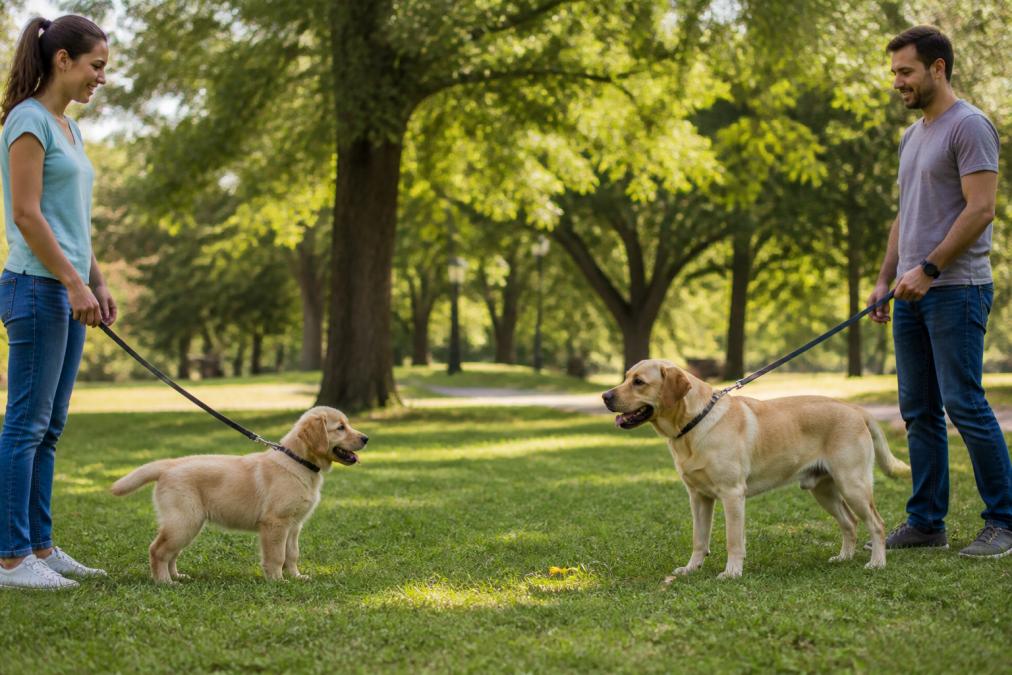
First Contact: Choosing the Right Dog
Not all dogs are good teachers. Look for an adult dog that is balanced, well-socialized, and has previous experience with puppies. Avoid very playful dogs that might overwhelm the little one, or those with a tendency toward reactivity. The meeting place should be neutral: a large park or a quiet street, never the territory of either dog.
Introduce them on a leash, but with the leash loose. Keep an initial distance and observe their reactions. If both show signs of calm, allow them to approach gradually. If you notice tension, remove them and try later.
Short, Controlled Sessions with Positive Reinforcement
The first interactions should not exceed 10 or 15 minutes. Positive reinforcement is the central tool: reward every calm approach and appropriate play with treats and praise. This associates the presence of other dogs with something pleasant.
Increase the difficulty progressively. First one known dog, then two, then an environment with more stimuli. Each session should end before the puppy becomes fatigued or overstimulated. Managing frustration is also part of the learning process: teach them to calm down and ignore other dogs when it is not time to interact.
Canine Body Language Signals You Must Recognize
Understanding canine body language is the most valuable skill for any owner. The dog is constantly communicating how they feel; you just need to learn to read it. A relaxed tail, neutral ear position, and smooth movements indicate comfort. Conversely, fear manifests as a crouched body, tail tucked between the legs, repeated yawning, or lip-licking for no apparent reason.
Healthy play includes play bows (lowering their chest while keeping their rear up), voluntary pauses, and alternating roles during chasing. Reactivity or stress appear when a dog freezes, growls, bares their teeth, or attempts to flee. Given these signs, separate the dogs immediately.
Professional trainers, as discussed in the r/Dogtraining communities, insist that socialization does not mean a puppy must interact with every dog they see. Teaching them to remain calm and ignore other dogs in public settings is just as important as encouraging play.
Selective Socialization vs. Dog Parks: What to Choose
There is a growing trend among professionals to advise against dog parks as a primary method of socialization. Many argue that these spaces are unpredictable, stressful environments where any owner can let a dog off-leash without control, as noted in the debate on r/Dogtraining. Massive socialization in a crowded park does not guarantee positive experiences; on the contrary, a bad experience can cause trauma that is difficult to reverse.
The alternative is selective socialization: planned encounters with specific dogs, in neutral environments, and with clear goals. This strategy offers several advantages:
- Total control over the duration and intensity of the encounter
- Selection of companions with compatible temperaments
- Prevention of negative experiences that damage trust
- Higher quality of interaction in less time
For most puppies, selective socialization is more effective than frequent visits to crowded parks. Parks can be an occasional supplement once the dog already has a solid foundation, never the starting point.
Common Mistakes When Socializing Dogs and How to Avoid Them
Flooding a puppy with too many stimuli at once is the most common mistake. Forcing interactions when the dog shows fear or anxiety only reinforces those negative emotions. Another common failure is ignoring signs of stress and allowing an adult dog to "correct" the puppy harshly, confusing a necessary lesson with a traumatic scare.
Inconsistency also causes harm. Socializing one day for an hour and then letting a week go by without contact with other dogs does not build solid skills. Consistency in short, frequent sessions outperforms sporadic marathons.
The final serious mistake is neglecting your own behavior. If you pull on the leash and get nervous when another dog approaches, your puppy senses it and reacts accordingly. Your calm is the anchor that allows them to feel safe.
The 'Flooding' Mistake and How to Avoid It
A particularly harmful mistake is taking a puppy to a crowded dog park "so they get used to it." This is known as flooding in canine psychology. Instead of habituating them, this sensory overload can create a lasting negative association. Trainers recommend systematic desensitization: exposing the puppy to the presence of other dogs at a distance where they feel safe (for example, across the street) and rewarding calm behavior. Gradually reduce the distance in successive sessions, never by more than 10-15% per session.
How to Handle a Negative Experience: The Post-Scare Protocol
If your puppy has a bad experience (an attack, a loud scare, or overly harsh correction), what you do in the following 48 hours is crucial for preventing future reactivity. The goal is to prevent fear from becoming a traumatic memory.
- Immediate, calm withdrawal: Do not punish the puppy for being scared. Move them away from the situation with a soothing voice, without dragging them.
- 'Social holiday' period: During the next 2 or 3 days, completely avoid any encounters with unknown dogs. Go for walks at times and in places where it is unlikely to cross paths with other canines. The goal is to allow the puppy's nervous system to regulate itself.
- Gradual reintroduction with 'umbrella dogs': After the rest period, look for an extremely calm and tolerant adult dog (an 'umbrella dog') for a controlled encounter in a neutral space. Maintain a greater distance than usual and observe whether the puppy shows curiosity or fear.
- Reinforcing calm: Reward any sign of curiosity or relaxation, even if it is minimal. Do not force interaction; let the puppy set the pace.
The Mistake of Confusing 'Rough Play' with 'Aggression'
It is common for owners to intervene unnecessarily when dogs play roughly, with growls and nipping. This play is normal and necessary. Interrupting it constantly can create frustration in the puppy. Learn to differentiate between play and a real fight: in play, dogs take turns being on top and bottom, perform play bows, and pauses are voluntary. In a real fight, bodies are rigid, ears are back, and there is no taking turns. If the play is mutual and both dogs seem relaxed, allow it to continue under supervision.
Useful Tools for Walking and Socializing Safely
The right gear makes control during encounters easier. A no-pull harness, such as the Reflective No-Pull Dog Harness from Mi Tienda 4 for $18.99, distributes pressure across the chest instead of the neck, reducing the risk of injury when the dog pulls in excitement. Its 360° reflective stitching allows you to walk safely at dawn or dusk.
For active owners, the Retractable Hands-Free Dog Leash with Waist Bag Set from Mi Tienda 4 for $22.99 offers control without sacrificing mobility. The waist belt leaves your hands free to give treats and manage the environment, while the integrated bag holds prizes and accessories. If you walk two dogs, the Automatic Double Dog Leash for $19.99 incorporates an anti-tangle mechanism and LED light for nighttime outings.


| Tool | Price | Best for | Key Feature |
|---|---|---|---|
| Reflective No-Pull Harness | $18.99 | Preventing pulling | 360° reflective stitching |
| Hands-Free Leash with Waist Bag | $22.99 | Active owners | Belt and integrated pouch |
| Auto Double Dog Leash | $19.99 | Two dogs | LED light and anti-tangle |
Conclusion: patience, consistency, and observation
Socializing a puppy with other dogs is not a race, but a gradual process that requires patience and constant attention. Each dog has its own pace; respecting it is the best investment in their future well-being. Careful observation of body language, selecting appropriate companions, and consistent positive reinforcement are the pillars of a balanced and confident adult dog.
At Mi Tienda 4, we understand that every walk is an opportunity to strengthen the bond with your pet. That is why we offer tools designed to make the experience safe and pleasant for both. Start today with the right gear and turn every encounter into a step toward a happy and well-adjusted dog.
Frequently Asked Questions
At what age is it safe to start socializing a puppy with other dogs?
Experts recommend starting socialization between 7 and 8 weeks of age, provided the puppy is healthy and has received its first vaccinations. The critical socialization period lasts until 16 weeks, so every day counts. You can start by introducing them to vaccinated, stable-tempered adult dogs in controlled environments before they complete their vaccination schedule, always avoiding areas with high traffic of unknown dogs.
What signs indicate my puppy is stressed during socialization?
The most common canine body language signs of stress include: repeated yawning, lip licking, tucking the tail between the legs, pinning ears back, panting without prior exercise, and showing the whites of the eyes ("whale eye"). If you observe these signs, separate the dogs calmly and give your puppy a break. A successful socialization session should last between 5 and 15 minutes maximum to avoid overstimulation.
Does my puppy need to play with every dog it meets?
No. Selective socialization is more effective than massive socialization. Teaching your puppy to stay calm and ignore other dogs in public settings is just as important as allowing them to play. Look for balanced, vaccinated dogs with good temperaments for the first interactions. If your puppy shows fear or reactivity, do not force them to interact; work on building confidence first with habituation and desensitization exercises from a distance.
How long does it take for a puppy to accept another dog?
There is no fixed time, but most puppies need between 2 and 4 short, positive encounters to feel comfortable with a new dog. The important thing is the quality of the interactions, not the quantity. Conduct introductions on neutral ground, with both dogs on a leash and harness, and supervise constantly. If your adult dog at home rejects the puppy, go slow: use baby gates and 5-minute sessions several times a day.