
Table of Contents
- Benefits of having a cat for mental and physical health
- How healthy is it to have a cat at home? The indoor vs. outdoor balance
- Real risks: zoonotic diseases (cat-to-human) and how to prevent them
- The 3-3-3 rule for cat adaptation: keys to healthy coexistence
- Preventive health and environmental enrichment: beyond the litter box
- Cats and seniors: companionship that improves quality of life
- Conclusion: how to maximize the health benefits of having a cat at home
- Frequently Asked Questions
Last update: September 4, 2026
Benefits of having a cat for mental and physical health
The question of how healthy it is to have a cat at home has an answer backed by the experience of millions of households: living with a cat can measurably improve your emotional and physical well-being. People who share their lives with pets often report better health and greater general well-being compared to those who do not, as noted by Purina’s research on wellness and pets. In this Mi Tienda 4 guide, we analyze the evidence so that you can decide with complete information.
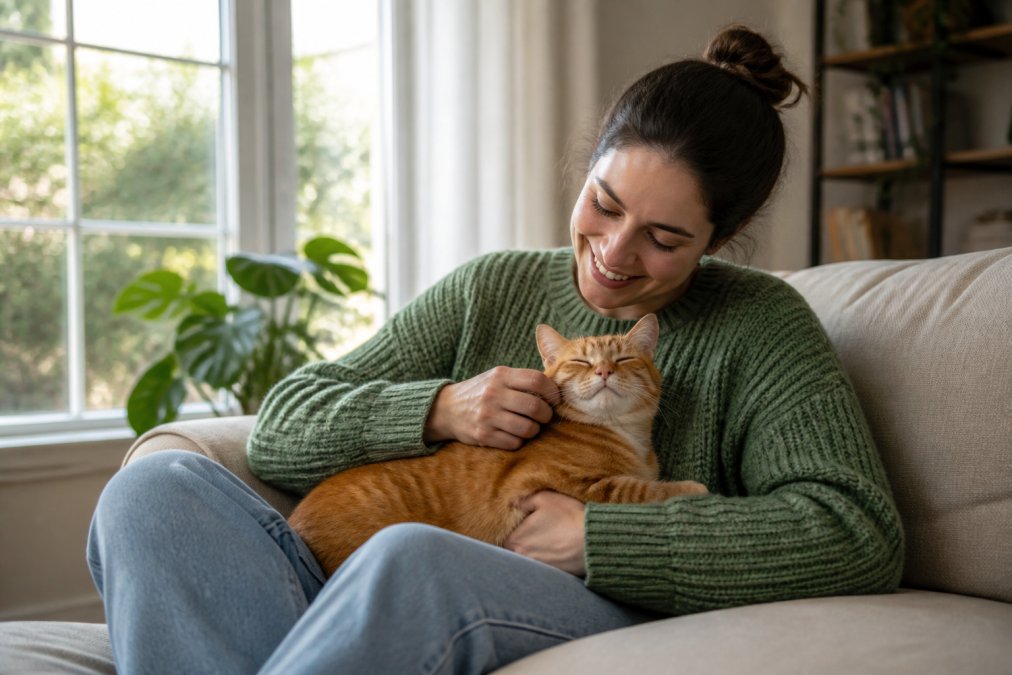
The primary mechanism is physiological. Petting a cat and listening to it purr reduces cortisol and promotes the release of oxytocin, which helps control anxiety and blood pressure, contributing to better cardiovascular health over time.
Beyond temporary relief, the routine of caring for another living being imposes healthy habits: feeding schedules, cleaning, and play. That daily structure is an anchor for people dealing with chronic stress and anxiety.
How healthy is it to have a cat at home? The indoor vs. outdoor balance
The most honest answer to how healthy it is to have a cat at home depends on the environment you provide, a decision that defines the animal's safety and modulates health risks for your family. The data is clear: an indoor cat lives on average 12 to 18 years; one with free access to the outdoors rarely exceeds 5 to 7.
Longevity and safety of the indoor cat
An indoor cat lives significantly longer than one with free access to the outdoors. The difference lies in prevention: without exposure to vehicles, fights, or predators, life expectancy is remarkably extended. An indoor cat with a well-adapted home and sufficient mental stimulation does not miss the outside; the key is environmental enrichment, not unsupervised freedom.
Risk comparison: indoor vs. outdoor
To gauge the impact of this decision, it is useful to contrast the most frequent risks:
| Risk factor | Indoor cat | Cat with outdoor access |
|---|---|---|
| Vehicle collisions | Virtually zero | Leading cause of traumatic death |
| Infectious diseases (feline leukemia, immunodeficiency) | Very low if vaccinated | High, due to contact with uncontrolled cats |
| Internal and external parasites | Low, controllable with regular deworming | High, requires strict monthly protocol |
| Fights and abscesses | Zero | Frequent, with risk of secondary infections |
| Intoxications (poisons, toxic plants) | Controllable if the home is checked | Unpredictable, outside your supervision |
| Natural enrichment (sun, exploration) | Must be replicated artificially | Present, but at a safety cost |
Veterinary evidence is consistent: most professionals recommend indoor living as the safest and healthiest option, provided you compensate for the lack of natural stimuli.
The hidden cost of the outdoors: impact on local wildlife
There is one dimension that few owners consider: the ecological impact. Studies by the Smithsonian Institution and the U.S. Fish and Wildlife Service estimate that cats with free access to the outdoors kill between 1.3 and 4 billion birds and between 6.3 and 22.3 billion small mammals every year, contributing to the decline of native species.
Keeping your cat indoors not only protects it; it also protects the biodiversity of your neighborhood.
Intermediate alternative: the catio or secure patio
For those who wish to offer outdoor experiences without the risks, there is the catio or enclosed cat patio: an outdoor space delimited with metal mesh or polycarbonate that allows the cat to sunbathe, smell the environment, and watch birds without the possibility of escaping or being attacked.
This option combines the safety of the indoors with the sensory stimulation of the outdoors and is recommended by organizations such as the American Association of Feline Practitioners.
With an adapted home and a commitment to enrichment, indoor living is the healthiest option for both the cat and your family.
Real risks: zoonotic diseases (cat-to-human) and how to prevent them
Zoonotic diseases (cat-to-human) are the topic that most concerns future owners. Zoonoses are infections transmissible from animals to people. These are the main feline zoonoses in the United States, their transmission mechanisms, and the prevention protocols backed by the CDC.
Toxoplasmosis: the most well-known and misunderstood risk
Toxoplasmosis is caused by the parasite Toxoplasma gondii. Cats are the definitive host, as the parasite only reproduces sexually in their intestine. Transmission to humans occurs by ingestion of oocysts in feline feces or, more frequently, by consumption of undercooked contaminated meat or poorly washed vegetables. The risk of contracting it from your cat is low if you clean the litter box daily, as the parasite needs between 1 and 5 days outside the body to become infectious. The CDC confirms that people are more likely to be infected by contaminated food than by direct contact with their cat. Pregnant women and immunocompromised individuals should take extra precautions: ideally, have another person clean the box; if not possible, wear disposable gloves and wash hands immediately after.
Cat scratch disease (Bartonella henselae)
This bacterial infection is transmitted by scratches or bites from infected cats, or by contact of their saliva with open wounds. Cats are primarily infected by fleas. The CDC estimates about 12,000 cases per year in the United States, with higher incidence in children aged 5 to 9. Symptoms include fever, fatigue, and swollen lymph nodes; in healthy people, it resolves without treatment in 2 to 4 weeks. Prevention is straightforward: control fleas, trim claws, and wash any scratches with soap and water.
Intestinal parasites: hookworms, roundworms, and giardia
Cats can harbor intestinal parasites transmissible to humans via the fecal-oral route. The most relevant are:
- Roundworms (Toxocara cati): eggs are shed in feces and can survive in the soil for years. Human infection occurs by accidentally ingesting eggs, especially in children who play in contaminated soil. It can cause visceral or ocular larva migrans.
- Hookworms (Ancylostoma): larvae can penetrate human skin, causing cutaneous larva migrans, an itchy and unpleasant condition.
- Giardia: a protozoan that causes diarrhea, transmitted by water or food contaminated with feces.
Prevention is regular deworming: the Companion Animal Parasite Council (CAPC) recommends deworming indoor cats at least twice a year, and those that go outdoors, monthly during flea season. Hand hygiene is the most effective barrier.
Ringworm (dermatophytosis): the most common fungal zoonosis
Despite its name, ringworm is not a worm but a fungus (Microsporum canis). It is transmitted by direct contact with an infected cat or contaminated surfaces and causes red, itchy, circular lesions. It is prevalent in kittens and shelter cats. Treatment requires oral and topical antifungals for several weeks, along with thorough environmental cleaning.
Comprehensive prevention protocol
Zoonosis prevention is neither complicated nor expensive. This is the protocol that most veterinarians recommend:
| Measure | Frequency | Impact |
|---|---|---|
| Daily litter box cleaning | Daily | Eliminates Toxoplasma oocysts before they become infectious |
| Hand washing after contact | Always | Reduces fecal-oral and bacterial transmission |
| Internal deworming | 2-4 times a year (depending on lifestyle) | Controls roundworms, hookworms, and giardia |
| Flea control | Monthly (all year in warm climates) | Prevents Bartonella and other vectors |
| Vaccination up to date | Annual or according to vet protocol | Reduces diseases that weaken the cat |
| Gloves when cleaning litter box | Especially during pregnancy or immunosuppression | Additional physical barrier |
| Claw trimming | Every 2-3 weeks | Reduces risk of deep scratches |
When to consult a doctor
Although feline zoonoses are rare in households with proper hygiene practices, consult a doctor if you or a family member develop persistent fever, unusual skin lesions, swollen lymph nodes, or gastrointestinal symptoms after a scratch or close contact with a cat, and mention your exposure to pets.
With responsible ownership, the benefits far outweigh the risks, which in households with healthy adults are minimal.
The 3-3-3 cat adaptation rule: keys to a healthy coexistence
When a cat arrives at a new home, adaptation is not immediate. The 3-3-3 cat adaptation rule describes the expected phases: three days to decompress, three weeks to learn your routine, and three months to feel completely at home.
During the first three days, the cat will likely hide and eat little; do not force it to socialize, offer it a safe space with its litter box, food, and water nearby. In the following three weeks, it will begin to explore and seek your attention. By the third month, trust is consolidated.
This guide prevents behavioral problems derived from stress, such as urine marking or aggression. Patience during these phases determines the quality of the long-term bond.
Preventive health and environmental enrichment: beyond the litter box
A cat's health is not limited to vet visits. Environmental enrichment sustains feline mental health and household harmony; a cat without stimulation develops destructive behaviors and obesity. The solution is to replicate their instincts indoors: hunting, stalking, and exploring.
Vertical scratchers satisfy the need to mark territory and sharpen claws. Toys that mimic prey activate the hunting instinct. Flowing water fountains encourage hydration, which is critical for preventing kidney disease.
Diet is also a vehicle for mental stimulation. Puzzle feeders or lick mats turn mealtime into a challenge that releases endorphins and reduces anxiety. At My Store 4, we offer solutions such as the interactive lick mat feeder and the chirping bird toy.

| Enrichment resource | Main benefit | Suggested frequency |
|---|---|---|
| Interactive prey toy | Channels hunting instinct | 2 sessions of 10 min daily |
| Flowing water fountain | Encourages hydration and prevents kidney disease | Always available |
| Vertical scratcher | Reduces stress and protects furniture | Daily self-directed use |
| Lick mat with food | Calms anxiety and slows down eating | Once a day |
Cats and seniors: companionship that improves quality of life
For older adults, having a cat transcends companionship: it becomes an active health factor. The routine of caring for a pet provides a sense of purpose and daily structure that combats depression and social isolation.

The impact extends to the cognitive and physical levels: interaction keeps the mind and hands active, and petting reduces blood pressure. For those living alone, the purr is a constant sound of life that mitigates loneliness. An indoor cat with a calm temperament is especially suitable, as it does not require walks or intense physical effort.
Adapting the home should consider the safety of both: non-slip surfaces, easy-to-access toys, and a low-sided litter box facilitate mutual care. The resulting emotional bond reports measurable benefits in quality of life.
Conclusion: how to maximize the health benefits of having a cat at home
Answering how healthy it is to have a cat at home requires looking at the big picture. The mental and physical health benefits are real and backed by the observation that people with animals are usually healthier and happier, as noted in Purina's information on pets and well-being. Older people find unparalleled emotional support in them, and the structure they impose improves daily habits.
That potential is only realized with responsible ownership: an indoor cat, adapted using the 3-3-3 rule, with up-to-date vaccinations and deworming, and with an environment rich in stimuli, is a source of health for the whole family.
At My Store 4, we understand that a home with a healthy cat is a happier home. That is why we offer accessories that facilitate this, such as the automatic water fountain to encourage hydration and the corner groomer with catnip for coat care. Controlling the feline population through spay/neuter programs also contributes to the general health of cats, as noted by the work of Alley Cat Allies on community cats.

The decision to share your life with a cat, made with information and preparation, is one of the most rewarding for your health. Explore our collection of accessories and create the environment your feline companion deserves.
Frequently Asked Questions
What diseases can a cat transmit to humans?
The main zoonotic diseases from cats to humans include toxoplasmosis, cat-scratch disease, and certain fungal infections like ringworm. The risk is low for people with a healthy immune system. Prevention is simple: keep deworming and vaccinations up to date, clean the litter box daily, and wash your hands after direct contact. Pregnant women should take extra precautions and delegate litter box cleaning when possible.
Does the 3-3-3 rule for cats really work?
The 3-3-3 rule is a useful framework for adapting a cat to a new home: 3 days to de-stress, 3 weeks to get to know its environment, and 3 months to feel completely secure and form an emotional bond. During the first few weeks, it is key to offer a quiet space with its basic resources. Patience and environmental enrichment, such as interactive toys, accelerate the adaptation process.
How does the presence of a cat affect human stress?
Interaction with a cat reduces cortisol levels and lowers blood pressure. Petting a cat and listening to its purr promotes the release of oxytocin, the bonding hormone. This translates to improved cardiovascular health and a reduction in anxiety. Incorporating daily play time with your cat boosts these mental health benefits.
What hygiene precautions should be taken when owning a cat?
Hygiene is fundamental for a healthy coexistence. Clean the litter box daily and disinfect it weekly. Wash bowls frequently. Keep deworming and vaccinations up to date according to your veterinarian's instructions. To reduce shedding and allergens in the home, regular brushing is essential. A filtered water fountain also promotes better hydration and urinary health.